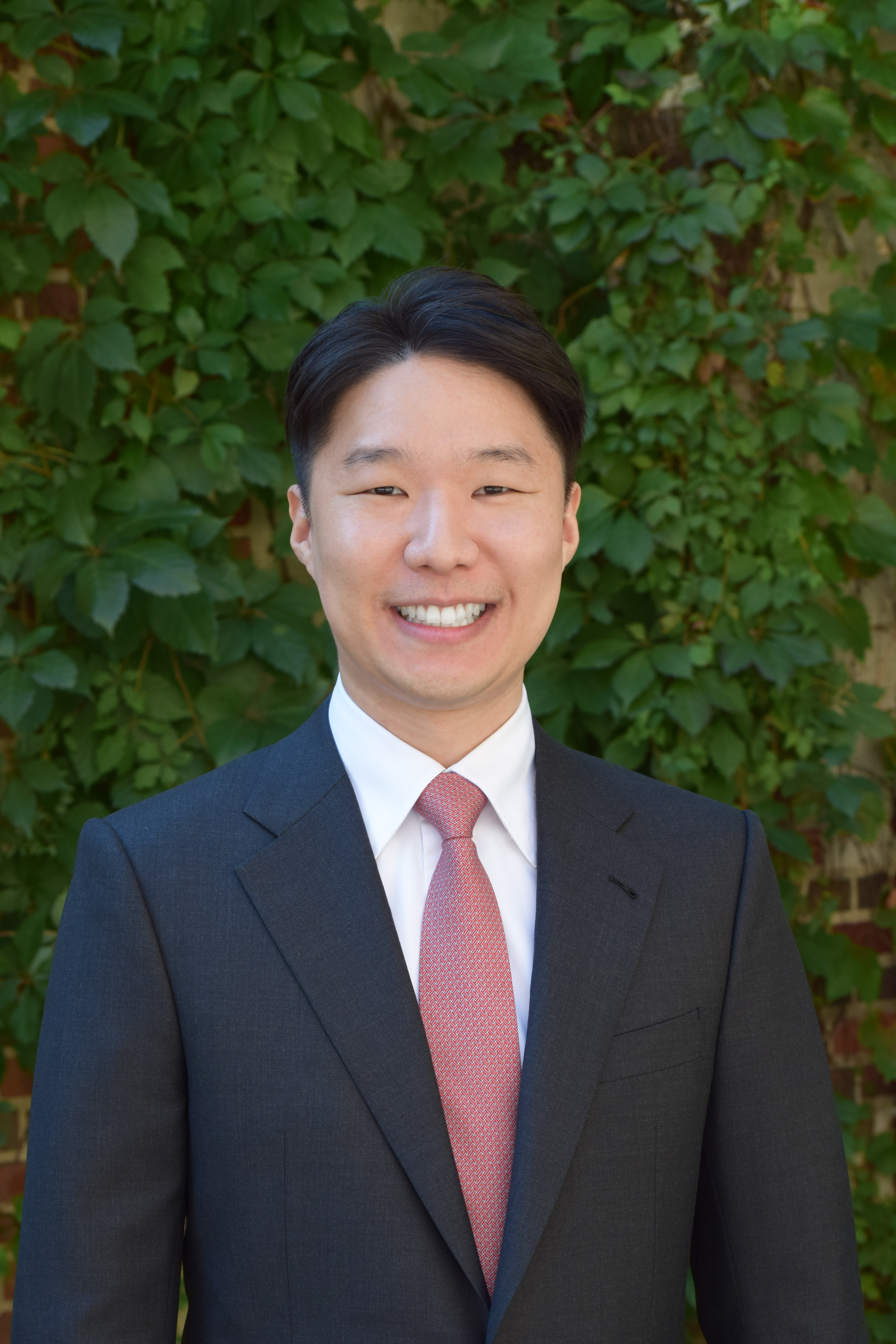
I am a PhD candidate at the Kenneth C. Griffin Department of Economics at the University of Chicago.
My research lies at the intersection of quantitative marketing, industrial organization, and public economics, focusing on how pricing and retail competition shape household access to essential goods and services. I combine structural modeling, field experiments, and machine learning to study and evaluate interventions by firms and policymakers in markets such as drugs, utilities, education, and housing.
I am on the 2026–27 academic job market.
My CV is available here. My email address is chanwoolkim@uchicago.edu.
Job Market Paper
Causes of Retail Pharmacy Closures
Draft available upon request.
Recent retail pharmacy closures have raised concerns about "pharmacy deserts" and access to prescription drugs, prompting state and federal proposals to raise the margins pharmacies earn on dispensing. This paper shows that the closures stem less from declining drug profitability than from the collapse of the front-store retail business that historically cross-subsidized dispensing. Using a novel dataset linking pharmacy sales, drug prices, and consumer shopping behavior, I document that the U.S. pharmacy market comprises two business models: multi-product chain pharmacies ("chains") that rely on consumer packaged goods (CPG) sales to offset low prescription (Rx) margins, and small independent pharmacies ("independents") that focus almost exclusively on dispensing. I demonstrate four empirical facts: (i) exits are concentrated among chains; (ii) exits reduce displaced patients' drug adherence only temporarily; (iii) exits concentrate where pharmacies are dense, leaving distance and driving time to the nearest pharmacy essentially unchanged; and (iv) exit rates track declining CPG sales, not falling Rx margins. Because entry and exit are forward-looking decisions that respond to total store profitability rather than the drug margin alone, I estimate a multi-category demand model that converts dispensing and front-store channels into store-level profit dollars and embeds it in a dynamic model of entry and exit. The model projects that the number of pharmacies will shrink by nearly half in the long run under current market conditions. Still, because projected closures are concentrated in dense markets, the distance to the nearest pharmacy barely changes. The consumer cost is modest and borne mainly through the prices charged by surviving stores rather than by lost access. My estimates imply that restoring margins to their real-terms peak would cost $30 billion per year, while recovering only a tenth of the decline and returning about one cent of consumer surplus per public dollar.
Working Papers
Addiction Runs: Rank Competition and Strategic Complementarities in Prescription Stimulant Usage
(with Giyoung Kwon and Younggeun Yoo)
Draft available upon request.
Abstract
We study the rise of prescription stimulant use for academic performance using a model with relative-performance externalities. Students compete for rank, where taking a stimulant improves effective performance but entails costs. Because payoffs from academic competition depend on others' performance, students' stimulant usage exhibits strategic complementarities: as more individuals use stimulants, others face stronger incentives to follow in order to avoid falling behind. We identify the model using prescription trends in the U.S and our own survey evidence on students' incentives, beliefs, and perceived costs. The estimated strategic complementarities are large enough to generate multiple equilibria, including one with low use and another with very high use, in which around 90 percent of students take stimulants. We use the estimated model to evaluate policies that (i) reduce the salience of relative evaluation, (ii) limit the competitive advantage conferred by stimulants, particularly through academic accommodations, (iii) separate academic competition between stimulant users and non-users (i.e., separate curves), and (iv) tighten prescribing standards to reduce non-medical use. Our estimates show that separate curves yield rankings that most closely reflect underlying ability and are the policy that least discourages true ADHD patients from taking prescribed stimulants.
Scale Up of an Influential Early Childhood Education Program
(with Andrés Hojman and Juan Pantano)
Accepted, Journal of Political Economy Microeconomics
Draft available upon request.
Abstract
The Early Head Start (EHS) program covers almost 200,000 children aged 0-2 in the U.S. It was modeled after the highly successful Abecedarian (ABC) program. However, results from EHS's early evaluation were considered weak, leading to claims that this was another example of a program that works well at the pilot stage but disappoints when implemented at scale. We demonstrate that this conclusion was perhaps premature. When comparisons are made appropriately, the effect sizes from EHS are as strong as those from ABC, if not larger. In comparing the programs, we adjust for population heterogeneity and differential compliance rates and exploit forest-based methods for causal inference.
Constrained Borrowing and Living Standard: Optimal Consumption/Savings and Investment Policies
(with Seyoung Park and Yonghyun Shin)
John P. Rust Best Paper Award
Eurasia Business and Economics Society 51st Conference
Draft available upon request.
Abstract
We study the optimal dynamic consumption and portfolio decisions of utility-maximizing agents who wish to maintain a living standard. Our findings reveal that the requirement to uphold a minimum living standard allows borrowing-constrained agents to endogenously determine a wealth threshold, which we refer to as subsistence wealth. Below this threshold, agents optimally choose to consume nothing. However, once their wealth surpasses the subsistence level, they significantly increase their consumption. This behavior aligns more closely with empirical estimates of marginal propensities to consume. Moreover, the presence of subsistence wealth lowers agents' effective risk aversion, leading them to favor riskier portfolios in the stock market. Finally, we endogenously determine the government's minimum willingness to pay to support the minimum living standard, which varies with economic conditions.
Work in Progress
Balancing Household Debt and Municipal Revenues: Personalized Water Utility Pricing
(with Jean-Pierre Dubé)
RCT complete (RCT ID: AEARCTR-0014214, UChicago IRB: IRB24-1449). Drafting in progress.
Package Size Options and Unequal Burden of Inflation
(with Youngeun Lee and Younggeun Yoo)
Surveying complete (BC IRB: 27.0053). Drafting in progress.
Speculative Demand Displacement: Evidence from the Korean Housing Market
Drafting in progress.
Housing Tenure as an Investment Decision: Evidence from Survey and Field Experiments
(with Younggeun Yoo)
Preliminary results.